
Ohio Obituary Records
Ohio obituary records can be found through a mix of state and local sources that span more than two hundred years of history. The state has 88 counties, and each one keeps its own set of death records and vital files at the local health department and probate court. You can search for Ohio obituary listings through public library indexes, newspaper archives, and free online databases run by the Ohio History Connection. The Rutherford B. Hayes Presidential Library holds an Ohio Obituary Index with over 3.7 million entries that go back to the 1810s. If you need a certified death certificate, the Ohio Department of Health Bureau of Vital Statistics can help with records from 1971 to the present day.
Ohio Obituary Records Overview
Where to Find Ohio Obituary Records
Ohio obituary records live in many places. The main state source is the Ohio Department of Health Bureau of Vital Statistics. This office keeps death records from 1971 to the present. They moved to a new spot at 4200 Surface Road, Columbus, OH 43228. You can call them at 614-466-2531. A certified copy costs $21.50 as of January 1, 2025, per Ohio Revised Code Section 3705.24. That fee applies even if no record turns up after a search. The Bureau accepts Visa, Mastercard, Discover, and American Express for online orders.
For older Ohio obituary and death records, the Ohio History Connection Archives and Library is the place to look. They hold death certificates from December 20, 1908 through December 31, 1970. That is a huge block of time. The archives sit at 800 E. 17th Avenue in Columbus. You can reach them at 614-297-2300 or by email at reference@ohiohistory.org. They cannot give you a certified copy for legal use. They can stamp copies to show where they came from, which works for things like genealogy research or DAR applications.
County health departments also issue death certificates. Most charge between $22 and $32 per copy. Each county handles deaths that took place in its own borders. Some counties can also issue birth certificates for anyone born in Ohio thanks to statewide issuance rules. For deaths before 1908, you need to check with the county probate court. Those early records were kept as line entries in court ledger books from 1867 to 1908.
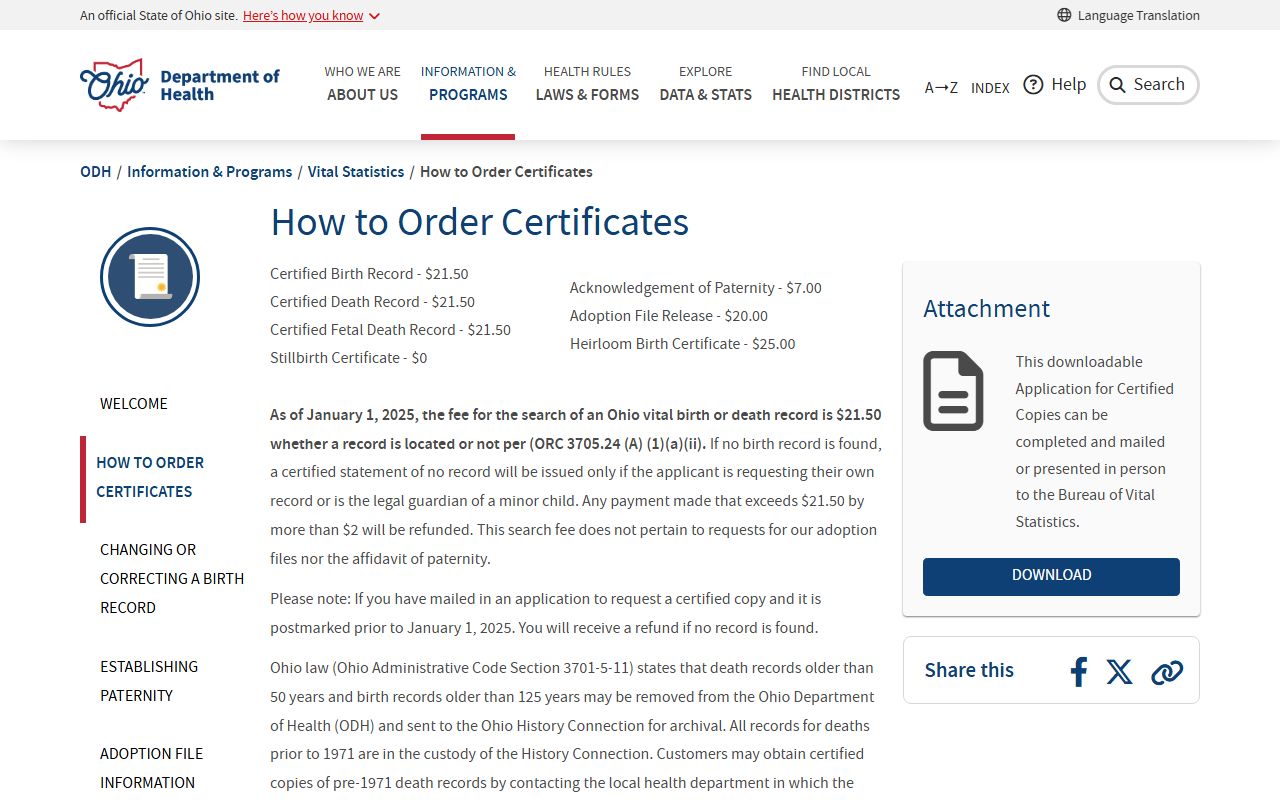
The Ohio Department of Health portal at odh.ohio.gov explains how to order certificates online, by mail, or in person. Most online orders are done within five business days.
Note: Death records less than 50 years old may have access limits under Ohio law, and Social Security numbers are blacked out for the first five years after death unless you can prove you are close family.
Ohio Obituary Index at the Hayes Library
The Rutherford B. Hayes Presidential Library and Museums in Fremont, Ohio runs the Ohio Obituary Index. This is one of the best free tools for finding Ohio obituary listings. The index has over 3.7 million entries from the 1810s to now. It started with Sandusky County papers and grew through partnerships with more than 60 libraries across the state. Coverage includes almost every county in northwest Ohio plus big chunks of Wayne, Washington, Auglaize, Ross, Gallia, Belmont, Highland, Franklin, Wood, and Clark counties.
The index does not just list newspaper obituaries. It also covers wills, estate records, funeral home files, local histories, some marriage notices, and cemetery listings. Funeral home records in the index often have details you will not find on a death certificate, like extended family names and biographical facts. You can search the index online for free at the Hayes library website. Only the Hayes Library offers online ordering of obituary copies. Other partner libraries may need a mail or phone request.
The Hayes Presidential Center at rbhayes.org also holds microfilm copies of Ohio death record indexes from 1908 to 1944. The library is at Spiegel Grove, Fremont, OH 43420, and is open Tuesday through Saturday, 9 am to 5 pm.
How to Search Ohio Obituary Records Online
The Ohio Death Record Index is a free searchable database from the Ohio History Connection. It covers death certificates from 1913 to 1944 and 1954 to 1970. You can also find stillborn certificates from 1913 to 1935 and 1942 to 1953, plus Columbus Board of Health records from 1904 to 1908. No sign-up is needed. To search, you need the person's name and year of death, plus one of these: county of death, exact death date, or certificate number.
FamilySearch is another strong free resource. They have Ohio death records from 1908 to 1953 with both index and image access. You can see the actual certificates. They also have an Ohio Death Index covering 1908 to 1932, 1938 to 1944, and 1958 to 2007 in index form only. A free account gets you into most collections. Some images need to be viewed at a FamilySearch Center or an affiliate library like many Ohio public libraries.
Keep in mind that many names in the Ohio Death Record Index were typed in by computer from old paper lists. Errors exist. Volunteers fix them over time, but a typical year had about 80,000 death certificates to work through. Try different spellings if you can't find someone. Send corrections to vitalrecords@ohiohistory.org.
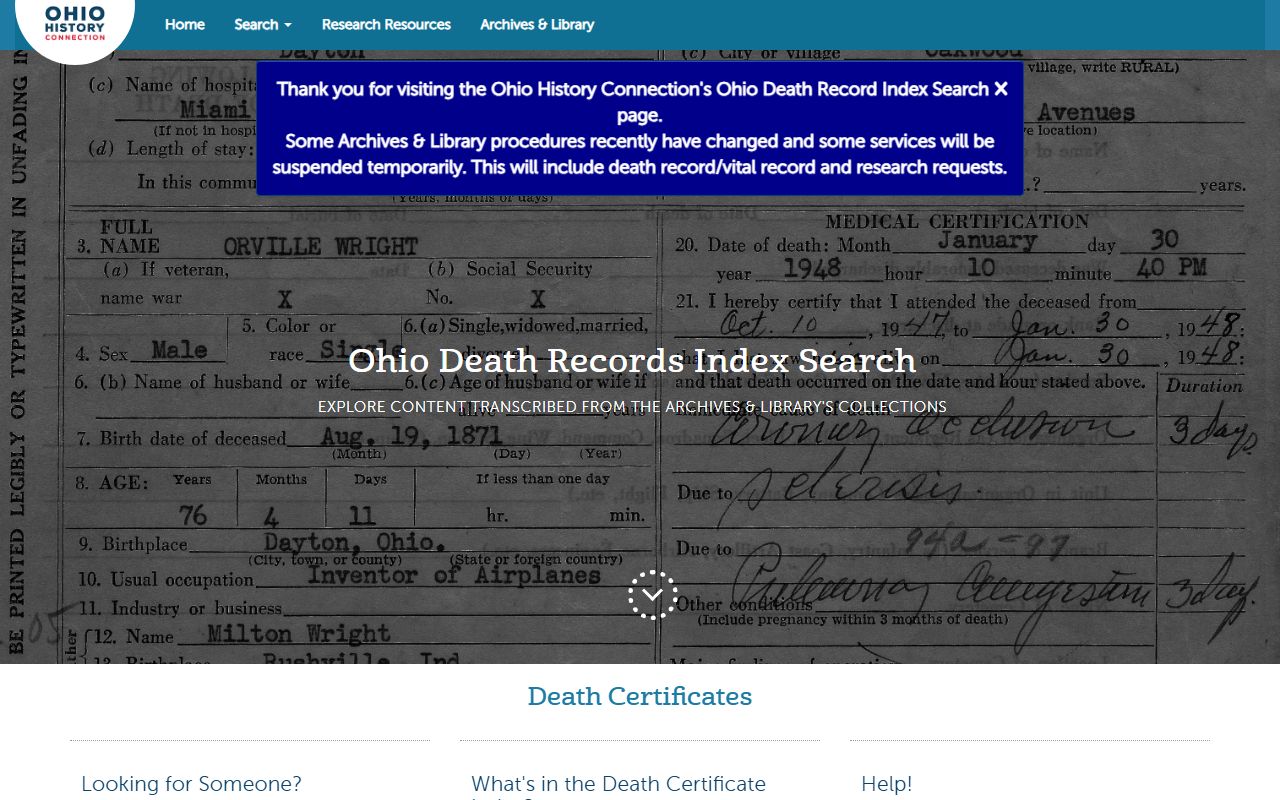
The Ohio Death Record Index lets you search millions of entries for free. Certificates found in the index from 1908 to 1953 can be ordered through the website shopping cart.
Ohio Library Obituary Resources
Ohio public libraries are some of the best places to dig up obituary records. The Cleveland Public Library has a Cleveland Necrology File with cemetery records and newspaper death notices from 1833 through 1975. You can search by name or keyword. The file has the full text of death notices as they ran in the original papers. For 1976 to 2014, the library has an index from the Cleveland Press and Plain Dealer. They also offer up to 3 free scans of death certificates per month by email from their 1908 to 1953 microfilm collection.
The Columbus Metropolitan Library keeps the Columbus News Index with an obituary index from 1931 to 1997. You can get up to 6 free obituaries per month through their research service. They also have the Green Lawn Cemetery Digital Collection and access to America's Obituaries and Death Notices database.
The Cleveland Public Library Center for Local and Global History at 325 Superior Avenue is one of Ohio's top genealogy collections for obituary research.
The Cincinnati and Hamilton County Public Library has one of the five largest genealogy collections in the United States. Their Newsdex index covers Cincinnati stories and death notices from decades of local papers. They have the Cincinnati Enquirer from 1841 to 1922 through ProQuest, and the Cincinnati Post from 1882 to 2007 in full text. The library also has a Cincinnati Birth and Death Records Index from 1865 to 1912 with over 528,000 entries.
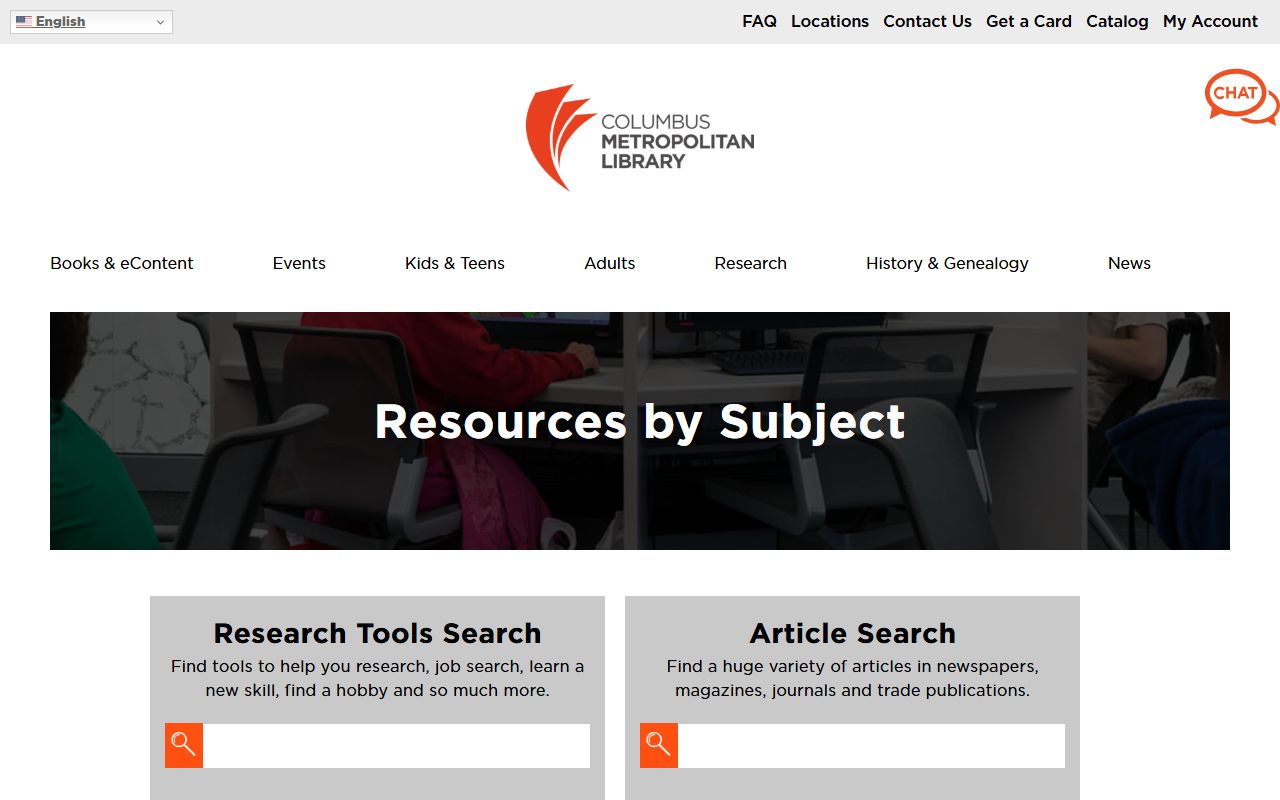
The Columbus Metropolitan Library at columbuslibrary.org provides free online access to obituary indexes and genealogy databases.
Ohio Probate Court Obituary and Death Records
Ohio's 88 county probate courts hold vital records that go way back. These courts have wills, estate files, guardianship records, and birth and death registers from 1867 to 1908. Before 1852, these records lived in the courts of common pleas. After that, each county got its own probate court. The records at probate courts often have more detail than a death certificate. Estate files can list the date of death, names of a spouse, children, parents, siblings, in-laws, and their places of residence.
The Hamilton County Probate Court is a good example. Their Archive Search has handwritten and typed records going back to 1791. You can look up estates, wills, trusts, guardianships, marriages, birth records, death records, and naturalizations online for free. The court has four search systems and lets you view PDF images of original documents.
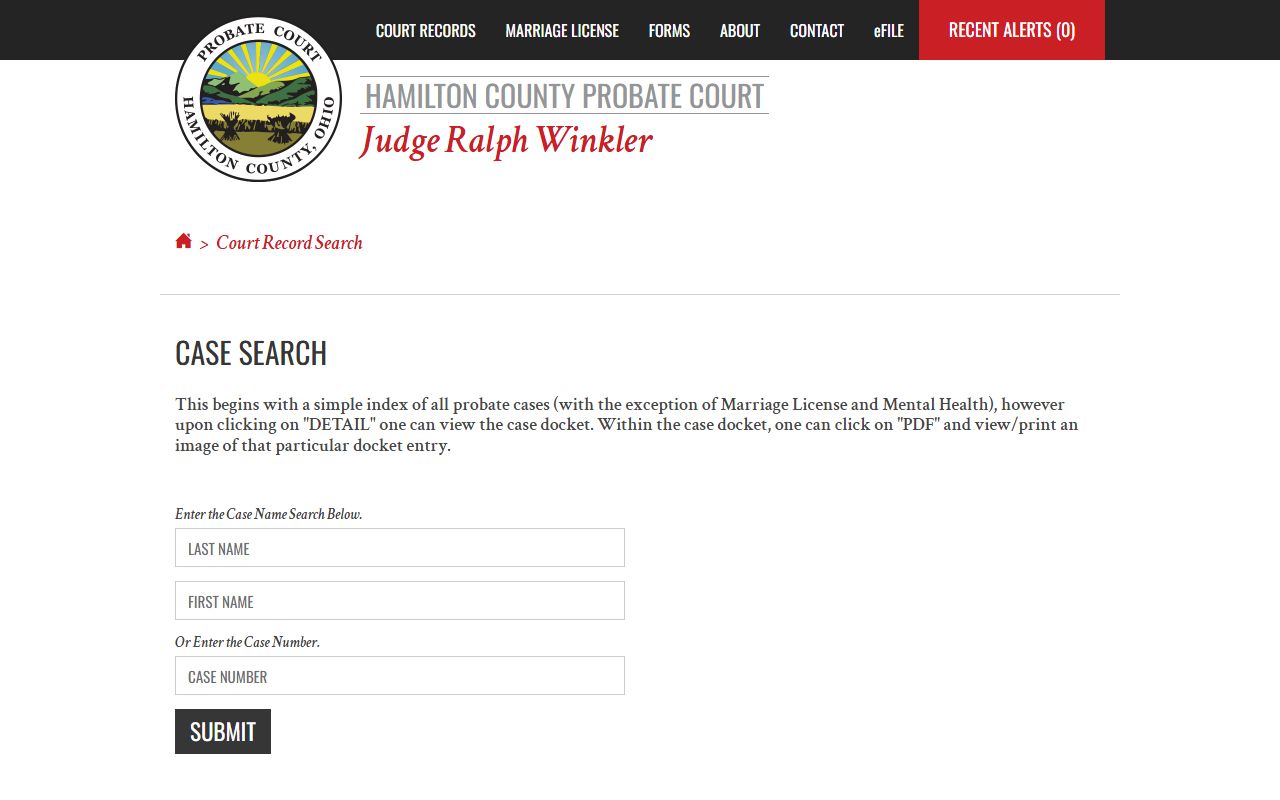
The Hamilton County Probate Court at probatect.org provides free online access to historical records dating back to 1791.
The Washington County Probate Court keeps records from 1789 to the present. Certified birth and death records from that court cost $5.00 per copy. Certified marriage records cost $2.00. They do not take personal checks. Payment can be cash, credit or debit card, or money order. Credit card payments have a 3% service charge with a $1.00 minimum. Washington County was established in 1788, making it one of Ohio's oldest.
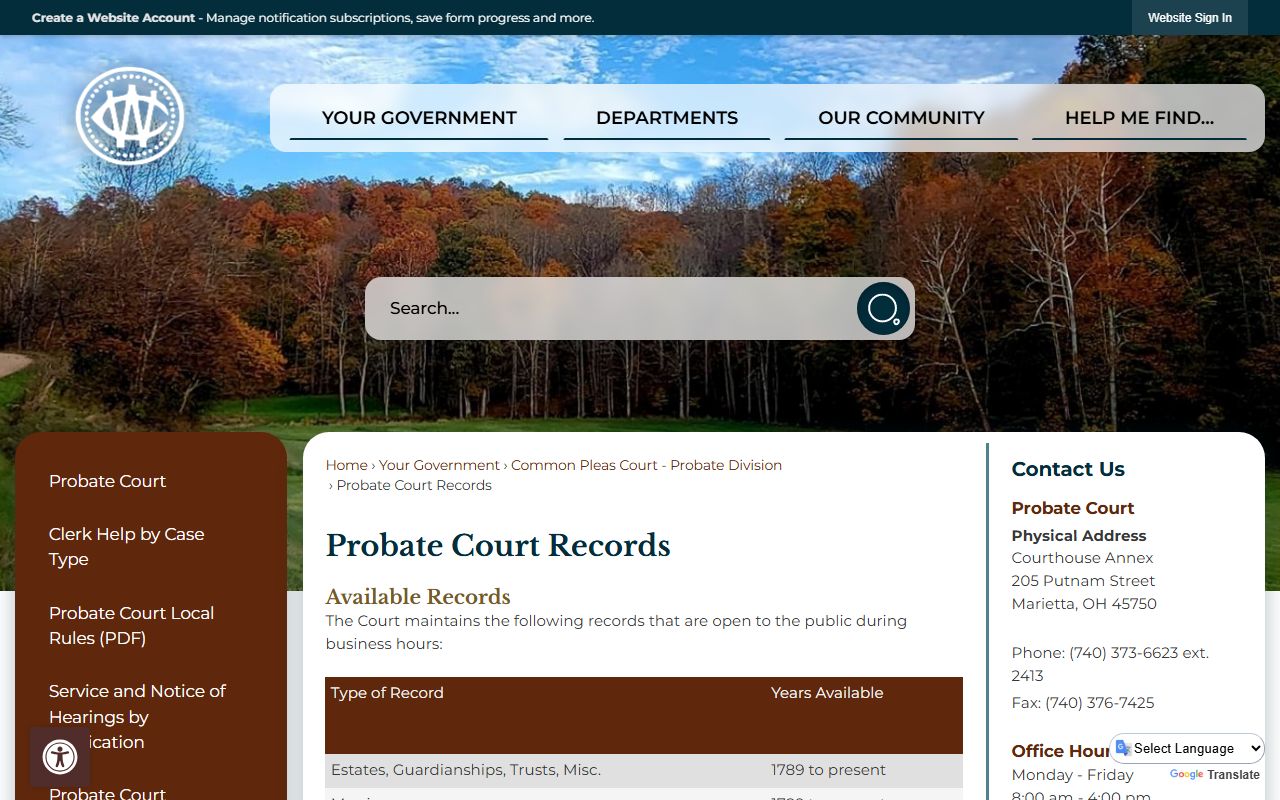
Washington County Probate Court at washingtongov.org maintains records from 1789 for one of Ohio's oldest counties.
Ohio Obituary and Death Record Laws
Ohio Revised Code Chapter 3705 sets up the rules for vital records in the state. It requires registration of all deaths, births, and fetal deaths. Section 3705.23 says the director of health or any local registrar must give out certified copies of vital records when someone asks, as long as they verify identity and eligibility. Section 3705.231 also lets people photograph or copy birth and death records at the local registrar's office, which is a big help for genealogists who want to make their own digital copies.
Section 3705.29 lists things you cannot do with vital records. Making false statements on a certificate, getting a certificate through fraud, or releasing private info without permission can lead to criminal charges. Section 3705.28 validates all prior records, meaning historical documents created under older laws are still legally good. That matters for genealogy researchers who work with records from the 1800s.
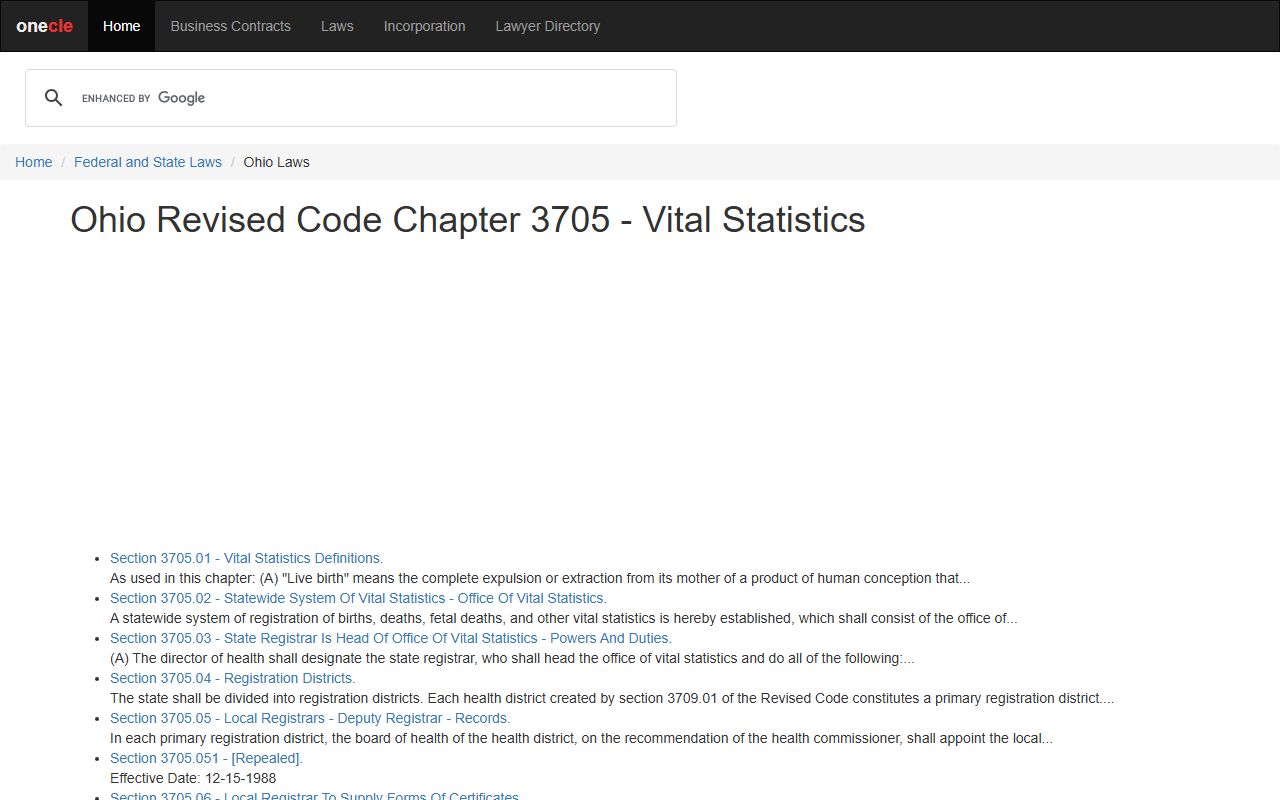
The full text of Ohio Revised Code Chapter 3705 covers vital statistics registration, access rights, fees, and privacy rules for death and obituary records.
Note: Under Ohio Administrative Code Section 3701-5-11, death records older than 50 years and birth records older than 125 years may be moved to the Ohio History Connection for long-term storage.
Ohio County Obituary Record Sources
Each Ohio county has its own set of offices for obituary and death records. The county health department handles death certificates from 1908 forward. The probate court has older records from 1867 to 1908. The clerk of courts keeps divorce and civil records. Fees change from county to county. Some charge $25 per certified copy, while others charge $27 or $32. A few rural counties charge as little as $22.
The Montgomery County Probate Court in Dayton is one example of what you can find at the county level. The court at 41 N Perry Street offers online case searching, forms, and e-filing. They have records of estates, trusts, guardianships, and marriages. Call 937-225-4640 for probate records or 937-225-4400 for marriage license info. Hours are Monday through Friday, 8:30 am to 4:30 pm.
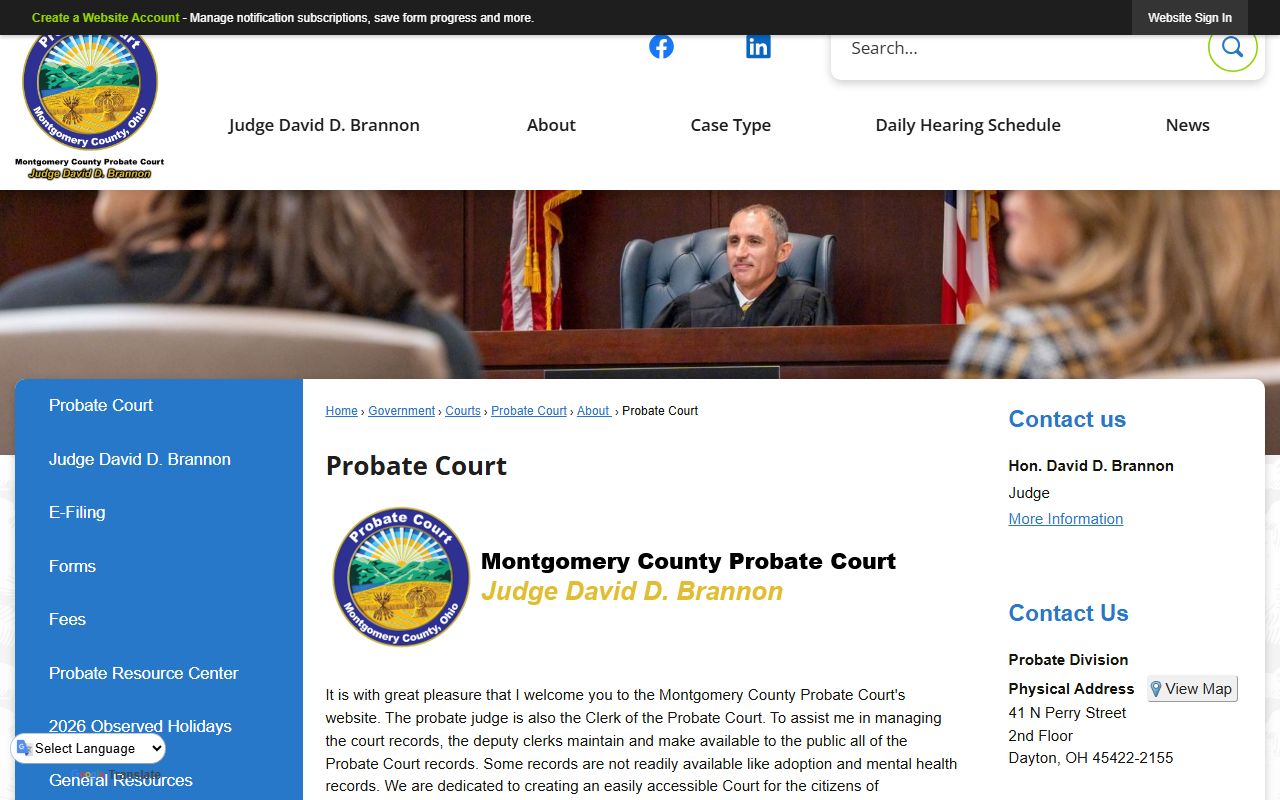
The Montgomery County Probate Court at mcohio.org provides online case search access for Dayton-area probate and death records.
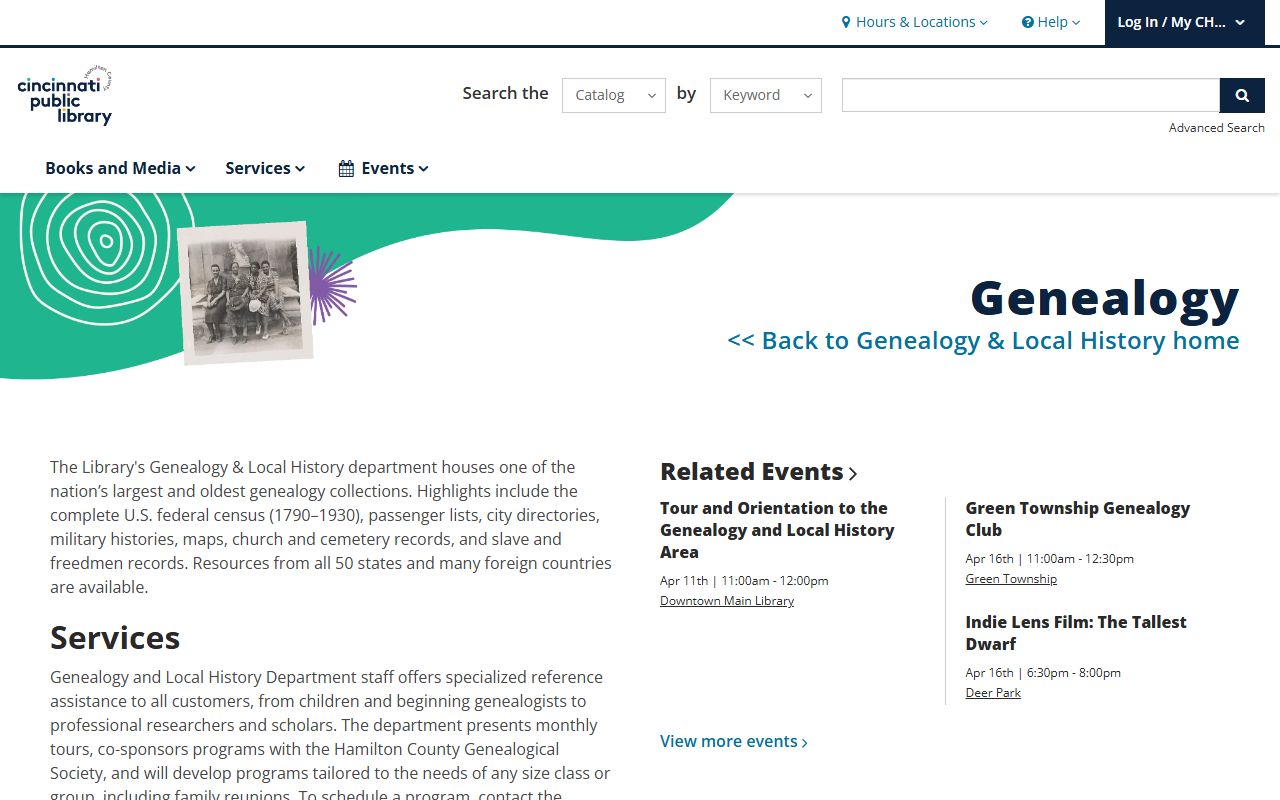
The Cincinnati and Hamilton County Public Library at chpl.org has one of the five largest genealogy collections in the country, with extensive obituary indexes and newspaper archives.
Ohio History Connection Archives
The Ohio History Connection holds probate court death records for 24 of Ohio's 88 counties. That makes it a key stop for research before 1908. They also have the full run of state death certificates from December 20, 1908 through 1970. Stillborn certificates from 1908 through 1953 are there too. Columbus Board of Health death certificates from 1904 to 1908 fill in a gap before statewide registration kicked in.
There is a hole in the online index for 1945 to 1953. If you need records from those years, you have to use microfilm indexes at the archives reading room in person. The archives are open Tuesday through Saturday. Call ahead to check hours. FamilySearch has digitized most death certificates from 1908 to 1953, and those are free to view with a free FamilySearch account.
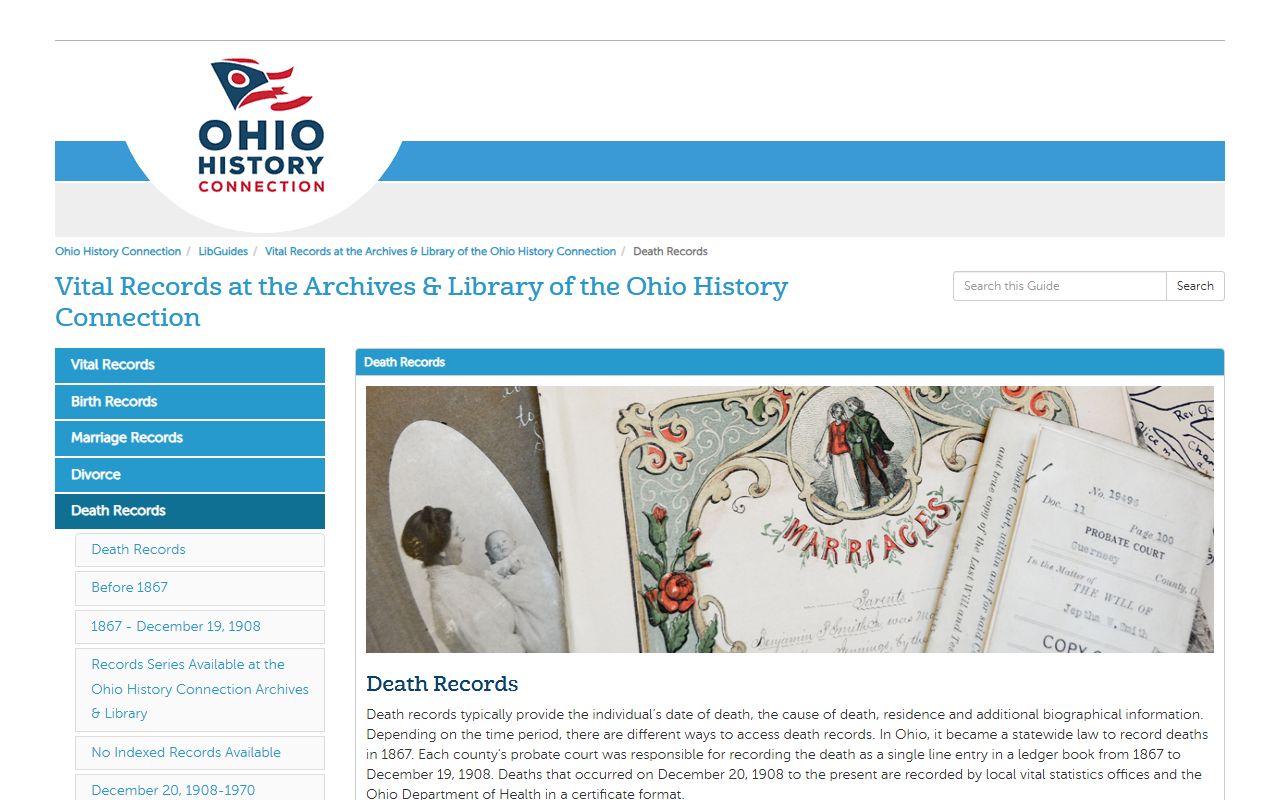
The Ohio History Connection Archives at ohiohistory.libguides.com is the state's main repository for historical death certificates and obituary research materials.
Browse Ohio Obituary Records by County
Each of Ohio's 88 counties has its own health department and probate court that handle death records and obituary research. Pick a county below to find local contact info and resources for obituary records in that area.
Obituary Records in Major Ohio Cities
Residents of major cities can search for obituary records through county health departments, local libraries, and city archives. Pick a city below to find where to go for obituary records in that area.